
Person-Centred Care: A Complete Guide for UK Care Managers
A practical guide to understanding, implementing and evidencing person-centred care — aligned to CQC expectations and built for busy care managers.
Last updated 18 July 2026
In this guide
What is person-centred care?
Person-centred care is an approach that puts the person receiving support at the centre of every decision about their care. It means seeing the individual first — their preferences, history, goals, routines and relationships — and designing care around them rather than fitting them into a standard process.
The Health Foundation defines person-centred care as care that is respectful of, and responsive to, individual preferences, needs and values. In UK social care, this is reinforced by CQC Regulation 9: Person-centred care, which requires providers to meet people’s needs in ways that respect their dignity and choices.
For care managers, this is not just a philosophy. It is a practical operating model that shapes how staff are trained, how care plans are written, how rota and visits are planned, and how quality is audited.
Why it matters in CQC inspections
CQC inspectors use the single assessment framework to judge services against five key questions: Safe, Effective, Caring, Responsive and Well-led. Person-centred care cuts across all five. A service that genuinely plans and delivers care around the individual will naturally produce better evidence for every key question.
Inspectors will look for evidence such as care plans written in the person’s own words, staff who can describe what matters to the individual, records of involvement from family and advocates, and review cycles that keep plans up to date. Services that cannot show this evidence often fall under Requires Improvement, even when clinical tasks are completed correctly.
In short, person-centred care is one of the clearest signals CQC uses to distinguish a good service from an outstanding one.
The six principles of person-centred care
Respect the individual
Co-ordinate around the person
Offer choice and control
Provide information people can use
Deliver personalised care and support
Treat people with dignity and compassion
Practical implementation for managers
Turning person-centred care from an idea into daily practice requires systems, habits and leadership. Here are six concrete steps managers can take.
1. Start with a one-page profile
Capture the essentials in language the person and their family understand: what matters to them, how they want to be supported, and what good looks like.
2. Train staff to ask, not just tell
Move from task-based supervision to reflective practice. Use handovers and spot checks to test whether staff really know the person’s preferences.
3. Embed person-centred language in care plans
Avoid clinical shorthand. Write “Mrs. Brown likes a cup of tea and the radio on before getting up” instead of just “assist with morning routine”.
4. Involve families and advocates
Hold regular reviews with the person, their representative and relevant professionals. Record who was consulted and what was agreed.
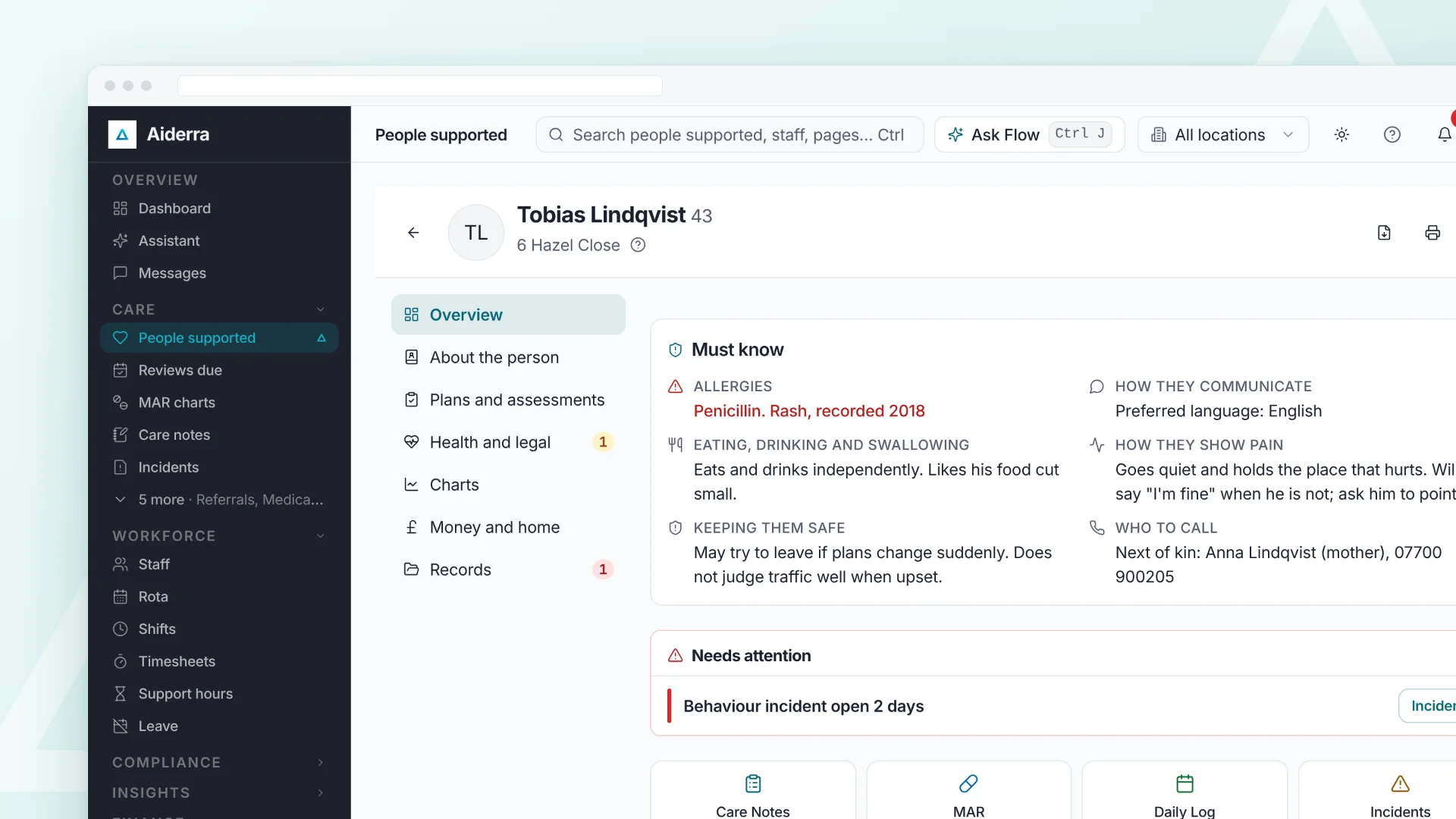
5. Use technology to keep the plan alive
Digital care plans make it easy for every carer to see the latest preferences, update notes in real time, and flag changes for review.
6. Review and audit
Set a review cycle (at least six-monthly) and check that plans are being followed. Use spot checks and feedback to close gaps.
How person-centred care links to CQC key questions
Safe
Effective
Caring
Responsive
Well-led
Frequently asked questions
What is person-centred care in simple terms?
Person-centred care means putting the person receiving care at the centre of every decision. It focuses on their preferences, needs, goals and values rather than treating everyone the same way.
Why is person-centred care important in CQC inspections?
CQC inspectors look for evidence that care is personalised, respectful and responsive. Person-centred care directly supports the Safe, Effective, Caring, Responsive and Well-led key questions.
How can care managers implement person-centred care?
Start with one-page profiles, train staff to ask rather than assume, involve families in reviews, write plans in plain language, and use digital tools to keep information current and visible.
What is the difference between person-centred and task-based care?
Task-based care focuses on getting jobs done. Person-centred care asks how the person wants those jobs done, by whom, when, and in what order — while still meeting safety and clinical needs.
Can person-centred care still be safe?
Yes. Person-centred care includes positive risk-taking and documented capacity decisions. It balances autonomy with protection and keeps a clear audit trail.
Put person-centred care into practice with Aiderra
Aiderra gives every carer instant access to person-centred care plans, live preferences, and audit-ready records — so your service stays CQC-ready without the paperwork burden.